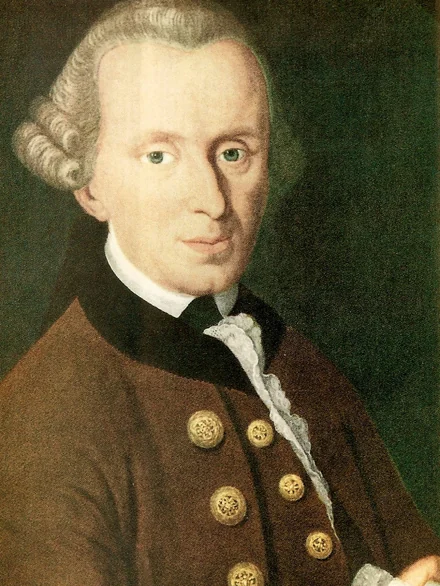
 Immanuel Kant1724 – 1804
“Happiness is not an ideal of reason, but of imagination.”
In Immanuel Kant's voice — an AI reflection
Happiness often dances just beyond the grasp of logic, for it is not a destination the mind can map with certainty. Reason sets the conditions for a life well-lived, but the heart paints its own picture of joy, shifting with desire and circumstance. To chase happiness as if it were a fixed truth is to mistake the brushstroke for the canvas. True fulfillment lies in acting from duty, while the imagination colors the rest.
What does this quote mean?
Human longing often pictures happiness as a destination, yet Kant’s insight cuts through this illusion by distinguishing between what reason can justify and what desire merely dreams. The line suggests that happiness, as commonly imagined, is a subjective and shifting picture conjured by the mind rather than a fixed, rational goal that can be universally defined or achieved through pure logic.
Situated in the late 18th-century Enlightenment, Kant’s Critique of Pure Reason sought to establish the limits of human understanding while defending the possibility of moral and metaphysical knowledge. In this era of burgeoning empiricism and rationalism, Kant argued that reason alone cannot give us a concrete, universally valid image of happiness because it is too tied to individual inclinations and external circumstances. His moral philosophy, particularly in Groundwork of the Metaphysics of Morals, later emphasized duty over personal satisfaction, reinforcing the idea that happiness, while desirable, is not the ultimate measure of a life well-lived.
For a modern parent, this idea offers a grounding perspective. Instead of chasing an ever-changing vision of family bliss shaped by social media or personal fantasy, it invites a focus on cultivating reason, responsibility, and ethical action. Raising children with an emphasis on duty, respect, and critical thinking rather than the pursuit of fleeting happiness can foster resilience and a deeper sense of purpose. The takeaway is not to dismiss happiness but to recognize that its pursuit is often a personal and imaginative endeavor, whereas lasting fulfillment may lie in the rational commitment to principles that transcend momentary joy.
Frequently asked questions
Who said “Happiness is not an ideal of reason, but of imagination.”?
“Happiness is not an ideal of reason, but of imagination.” is by Immanuel Kant.
More quotes by Immanuel Kant
- “Act only according to that maxim whereby you can, at the same time, will that it should become a universal law.”
- “All our knowledge begins with the senses, proceeds then to the understanding, and ends with reason. There is no other source.”
- “There is no possibility of thinking of anything in the world, or even out of it, which can be regarded as good without qualification, except a good will.”
Which philosopher are you?
Six questions. No wrong answers.
Keep Immanuel Kant in your pocket
Sagius is free to download and gives you 10 free credits to try the AI features — chat with Immanuel Kant and other great philosophers, and have any quote explained with the meaning behind it.