German Idealism
The catalogue includes 14 thinkers in German Idealism.
How these pages are made
Each school page lists the thinkers in our catalogue who belong to this tradition (primary school or recorded affiliation). Dates, works and bios come from the same catalogue as the app. We do not write original essays about the school.
Thinkers in this tradition
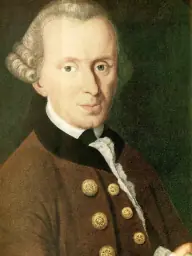
- Immanuel Kant1724–1804
Immanuel Kant (1724–1804) is widely regarded as one of the greatest philosophers in Western history. His Critique of Pure Reason revolutionised epistemology, while the Groundwork for the Metaphysics of Morals introduced…
- Johann Wolfgang von Goethe1749–1832
Johann Wolfgang von Goethe (1749–1832) was a German writer and polymath — poet, playwright, novelist, scientist, and statesman — who stands as the towering figure of German literature. His masterwork Faust, a drama…
- Friedrich Schiller1759–1805
Friedrich Schiller (1759–1805) was a German poet, playwright, and philosopher who became one of the most celebrated figures of German Classicism. His plays — The Robbers, Don Carlos, and the Wallenstein trilogy —…
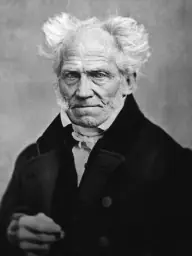
- Arthur Schopenhauer1788–1860
German philosopher known for his pessimistic worldview, who argued that the world is driven by an aimless will, and that art, compassion, and asceticism offer escape from suffering.
- G.W.F. Hegel1770–1831
Georg Wilhelm Friedrich Hegel (1770–1831) was a German philosopher whose dialectical system reshaped how Europe understood history, freedom, and consciousness. From the Phenomenology of Spirit to the Lectures on the…
- Benedetto Croce1866–1952
Benedetto Croce (1866–1952) was an Italian neo-Hegelian philosopher, historian, and senator who, almost alone among the cultural authorities of his country, refused to sign on to fascism and used his journal La Critica…
- Friedrich Hölderlin1770–1843
Friedrich Hölderlin (1770–1843) was a German poet whose hymns stand among the summits of German literature and remain a touchstone for philosophers. A seminary roommate of Hegel and Schelling in Tübingen, he fused…
- Friedrich Wilhelm Joseph Schelling1775–1854
Friedrich Wilhelm Joseph Schelling (1775–1854) was a German Idealist philosopher who made nature itself a central theme of philosophy. A prodigy who shared a room with Hegel and Hölderlin at the Tübingen seminary, he…
- Georg Simmel1858–1918
Georg Simmel (1858–1918) was a German philosopher and a founding figure of sociology. In The Philosophy of Money (1900) he analysed how a money economy transforms human relationships, and his essays on the metropolis,…
- Heinrich Heine1797–1856
Heinrich Heine (1797–1856) was a German poet and essayist whose Book of Songs became one of the most frequently set-to-music poetry collections ever, inspiring Schubert and Schumann. A master of irony who bridged…
- Johann Gottlieb Fichte1762–1814
Johann Gottlieb Fichte (1762–1814) was a German idealist philosopher who made the self-positing 'I' the foundation of all knowledge in his Wissenschaftslehre. Bridging Kant and the later idealism of Schelling and Hegel,…
- Josiah Royce1855–1916
Josiah Royce (1855–1916) was an American philosopher and the leading defender of absolute idealism in the United States. Born in the California gold-rush town of Grass Valley, he taught at Harvard for over three…
- Novalis1772–1801
Novalis (1772–1801) was the pen name of Georg Philipp Friedrich von Hardenberg, a German poet and philosopher at the heart of early Romanticism. In Hymns to the Night and the unfinished novel Heinrich von Ofterdingen —…
- Rudolf Steiner1861–1925
Rudolf Steiner (1861–1925) was an Austrian philosopher and esotericist who founded anthroposophy, a movement claiming that a rigorous science of the spirit is possible. His early Philosophy of Freedom defended human…