Humanism
The catalogue includes 24 thinkers in Humanism.
How these pages are made
Each school page lists the thinkers in our catalogue who belong to this tradition (primary school or recorded affiliation). Dates, works and bios come from the same catalogue as the app. We do not write original essays about the school.
Thinkers in this tradition
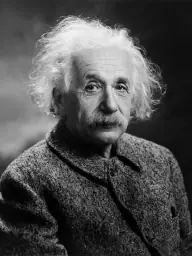
- Albert Einstein1879–1955
Albert Einstein (1879–1955) was a theoretical physicist who developed the theory of relativity and made foundational contributions to quantum mechanics. His famous equation E=mc² and his insights into the nature of…
- Martin Luther King Jr.1929–1968
Martin Luther King Jr. (1929–1968) was a Baptist minister and civil rights leader who championed nonviolent resistance against racial segregation. His 'I Have a Dream' speech and leadership of the Montgomery Bus Boycott…
- Antoine de Saint-Exupéry1900–1944
Antoine de Saint-Exupéry (1900–1944) was a French writer and aviator whose memoir 'Night Flight' and novella 'The Little Prince' made him a literary legend. 'The Little Prince', a poetic tale of a pilot's encounters…
- Maya Angelou1928–2014
Maya Angelou (1928–2014) was an American poet, memoirist, and civil rights activist whose voice shaped American culture for over five decades. Her autobiographical masterpiece 'I Know Why the Caged Bird Sings' broke new…
- James Baldwin1924–1987
James Baldwin (1924–1987) was an American novelist, playwright, essayist, and civil rights activist whose penetrating explorations of race, sexuality, and identity made him one of the most influential American writers…
- Daniel J. Boorstin1914–2004
Daniel J. Boorstin (1914–2004) was an American historian, professor, and author who served as the 12th Librarian of Congress. His trilogy 'The Americans' earned the Pulitzer, Bancroft, and Parkman Prizes. In works like…
- Bertrand Russell1872–1970
Bertrand Russell (1872–1970) was a British philosopher, logician, mathematician, and Nobel laureate in Literature. One of the founders of analytic philosophy, he co-authored 'Principia Mathematica' and made influential…
- Michel de Montaigne1533–1592
French Renaissance writer and philosopher who pioneered the personal essay as a literary form. His Essais explored the human condition with radical honesty and skeptical inquiry.
- Niccolò Machiavelli1469–1527
Italian Renaissance political philosopher, historian, and diplomat whose works on statecraft and human nature remain foundational to modern political thought.
- Helen Keller1880–1968
Helen Keller (1880–1968) was an American author, disability rights advocate, and lecturer. Deaf and blind from early childhood, she learned to communicate with the help of her teacher Anne Sullivan, earned a college…
- Étienne de La Boétie1530–1563
Étienne de La Boétie (1530–1563) was a French jurist, humanist, and the closest friend of Michel de Montaigne. His youthful Discourse on Voluntary Servitude is the founding text of European liberty literature: it asks…
- Erasmus of Rotterdam1466–1536
Erasmus of Rotterdam (1466–1536) was a Dutch humanist scholar, the most influential European intellectual of the early sixteenth century. His critical edition of the Greek New Testament reopened biblical scholarship and…
- Marsilio Ficino1433–1499
Marsilio Ficino (1433–1499) was the Florentine philosopher and priest whose translations of Plato and Plotinus, made in the gardens at Careggi under the patronage of the Medici, gave the Italian Renaissance its…
- Czesław Miłosz1911–2004
Polish-Lithuanian poet, essayist and Nobel laureate (1911–2004). His 1953 essay *The Captive Mind* dissected the moral compromises by which Eastern European intellectuals accommodated themselves to Stalinism,…
- Tzvetan Todorov1939–2017
Bulgarian-French historian, literary theorist, and moral philosopher (1939–2017). Trained in Paris under Roland Barthes, he was a founder of structuralist narratology before his work shifted decisively in the 1980s…
- Henri Bergson1859–1941
French philosopher of life and time (1859–1941). His doctrine of *durée* (lived duration) argued that real time — the qualitative flow of consciousness — cannot be captured by the spatialised, quantified time of…
- Mary Midgley1919–2018
British moral philosopher (1919–2018). Part of the famous Somerville College quartet (with Anscombe, Foot and Iris Murdoch), she came to philosophical prominence late, publishing her first book at 59. *Beast and Man*…
- Bernard Williams1929–2003
English moral philosopher (1929–2003). The most influential British ethicist of his generation, his *Ethics and the Limits of Philosophy* (1985) argued that the entire utilitarian and Kantian tradition had taken a wrong…
- Charles Taylorb. 1931
Canadian philosopher (b. 1931). Trained at Oxford under Isaiah Berlin, he became the leading communitarian critic of the procedural-liberal tradition. *Sources of the Self* (1989) reconstructed the moral genealogy of…
- Edith Stein1891–1942
German-Jewish phenomenologist, Carmelite nun, and martyr (1891–1942). Husserl's most gifted assistant in Freiburg, her doctoral dissertation *On the Problem of Empathy* (1917) gave the first phenomenological account of…
- Erich Fromm1900–1980
German-Jewish social psychologist and philosopher (1900–1980). Trained as a psychoanalyst at the Frankfurt Institute, he broke with Freudian orthodoxy to develop a humanistic psychoanalysis rooted in social conditions.…
- Iris Murdoch1919–1999
Anglo-Irish philosopher and novelist (1919–1999). After studying with Wittgenstein's circle and Sartre at the Liberation, she became Oxford's most distinctive moral philosopher of the postwar years, opposed equally to…
- Martha Nussbaumb. 1947
American moral and political philosopher (b. 1947). Trained as a classicist before turning to political philosophy, she has been one of the most-translated public intellectuals of the past forty years. *The Fragility of…
- Pico della Mirandola1463–1494
Pico della Mirandola (1463–1494) was an Italian Renaissance philosopher who sought to harmonize Plato, Aristotle, Christian theology and the Kabbalah into a single vision of truth. At twenty-three he proposed to defend…