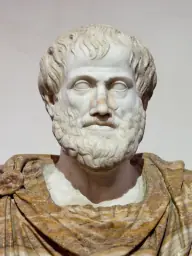
 Aristotle384 BC – 322 BC
“Those who educate children well are more to be honored than they who produce them; for these only gave them life, those the art of living well.”
In Aristotle's voice — an AI reflection
To honor the one who teaches is to honor the architect of the soul, for life is but the raw material, and virtue the craft that shapes it. The parent gives the seed, but the teacher tends the garden, guiding the young toward the good and the true. Without this art, life remains unformed, like a lyre with unstrung chords. The greatest gift is not birth, but the wisdom to live well.
What does this quote mean?
The idea that shaping a child’s character outweighs the mere act of bringing them into the world challenges us to reconsider where true value lies in the journey of parenthood. Aristotle’s observation elevates education as the higher craft, for while biology grants life, wisdom and virtue give it meaning. The distinction he draws is not about diminishing the role of parents but about recognizing that the work of nurturing a thoughtful, ethical human being is a more profound contribution to society.
Aristotle wrote this in the Nicomachean Ethics, a foundational text of moral philosophy composed in the 4th century BCE, a time when Athens was deeply invested in questions of virtue, citizenship, and the good life. As a tutor to Alexander the Great and a student of Plato, Aristotle was immersed in a culture that prized paideia—the holistic education of the young—as essential to the health of the polis. His works, from the Politics to the Ethics, consistently argue that human flourishing depends on cultivated habits and reason, not just innate potential. This line reflects his broader belief that excellence is not accidental but the result of deliberate, skillful guidance.
Today, this idea resonates powerfully in an era where parenting often feels reduced to providing material comforts or academic advantages. Aristotle’s words remind us that the most lasting gift we can give children is not a head start in competition but the tools to live with integrity, curiosity, and compassion. Whether through formal education, modeling good behavior, or fostering critical thinking, the effort to shape a child’s moral and intellectual life is an act of creation far more enduring than the biological one. In a world obsessed with measurable outcomes, his insight urges us to prioritize the intangible but transformative work of forming good humans.
Frequently asked questions
Who said “Those who educate children well are more to be honored than…”?
“Those who educate children well are more to be honored than…” is by Aristotle.
More quotes by Aristotle
- “Democracy is when the indigent, and not the men of property, are the rulers.”
- “The soul never thinks without a mental picture.”
- “Let us now summarize our results about soul, and repeat that the soul is in a way all existing things; for existing things are either sensible or thinkable, and knowledge is in a way what is knowable, and sensation is in a way what is sensible: in what way we must inquire.”
Which philosopher are you?
Six questions. No wrong answers.
Keep Aristotle in your pocket
Sagius is free to download and gives you 5 free credits, +5 when you sign up, to try the AI features — chat with Aristotle and other great philosophers, and have any quote explained with the meaning behind it.