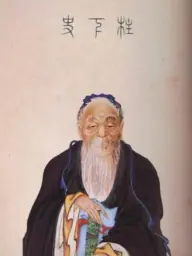
 Lao Tzu601 BC – 531 BC
“He who knows others is wise; He who knows himself is enlightened.”
In Lao Tzu's voice — an AI reflection
To know others is to see the surface of the river, but to know yourself is to dive into its depths and find the source. Wisdom is the lantern that lights the path ahead, but enlightenment is the dawn that reveals the path within. True understanding begins not with the world around you, but with the stillness at your own center.
What does this quote mean?
Wisdom often begins with observation, but true enlightenment emerges from introspection. This line from the Tao Te Ching draws a subtle yet profound distinction between understanding the external world and grasping one’s own inner nature. The first is the mark of a learned mind, capable of navigating relationships and society; the second is the hallmark of a spirit that has turned its gaze inward, recognizing the depths of its own being as the source of clarity and peace.
Lao Tzu, the legendary sage of ancient China, lived during a period of political turmoil in the 6th century BCE, a time when the Zhou Dynasty was fracturing into competing states. The Tao Te Ching, attributed to him, is a foundational text of Taoism, offering a philosophy centered on harmony with the Tao, or "the Way." In this era of strife, Lao Tzu’s teachings emphasized humility, simplicity, and self-awareness as paths to both personal and societal balance. His words reflect a belief that outer wisdom, while valuable, is secondary to the inner work of self-discovery, which aligns the individual with the natural order of the universe.
Today, this idea resonates strongly in a world saturated with information and distractions. Knowing others might mean mastering social dynamics or professional networks, but knowing oneself requires quiet reflection—a pause to question motivations, fears, and desires. In practical terms, this could mean setting aside time for journaling, meditation, or simply unplugging from the noise of daily life. Enlightenment, in this sense, isn’t an abstract ideal but a tangible state of self-awareness that brings focus and authenticity to every decision.
Frequently asked questions
Who said “He who knows others is wise; He who knows himself is…”?
“He who knows others is wise; He who knows himself is…” is by Lao Tzu.
More quotes by Lao Tzu
Which philosopher are you?
Six questions. No wrong answers.
Keep Lao Tzu in your pocket
Sagius is free to download and gives you 5 free credits, +5 when you sign up, to try the AI features — chat with Lao Tzu and other great philosophers, and have any quote explained with the meaning behind it.