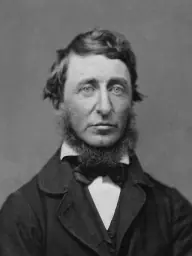
 Henry David Thoreau1817 – 1862
“I would rather sit on a pumpkin, and have it all to myself, than be crowded on a velvet cushion.”
In Henry David Thoreau's voice — an AI reflection
I once wrote that line to remind myself that freedom is not in the finery of life but in the space to breathe. A pumpkin may be humble, but it offers room for the soul to stretch. The velvet cushion, for all its softness, can feel like a cage if it means sharing your thoughts with a crowd. True wealth is the quiet corner where you can be entirely yourself.
What does this quote mean?
Solitude and self-possession take precedence over comfort shared with a crowd in Thoreau’s wry declaration. The image of a lone figure on a pumpkin, unpolished and unadorned, captures the essence of his philosophy: true wealth lies in the freedom to think, observe and exist without the distractions of social conformity or material excess. The velvet cushion, though plush, becomes a symbol of empty luxury when it forces one into the jostle of others’ expectations, leaving no room for the self.
Thoreau penned this sentiment during a period when industrialization and urbanization were reshaping American life, pulling people into denser, noisier existences. His experiment at Walden Pond, chronicled in Walden, was a deliberate retreat from that tide, a two-year attempt to live simply and deliberately. In Civil Disobedience and A Week on the Concord and Merrimack Rivers, he similarly champions individual conscience over collective convenience, whether in politics or daily habits. The mid-19th century was a time of growingrailroads, factories and crowded cities, and Thoreau’s works stand as a counterpoint, urging readers to resist the lure of comfort if it costs them their autonomy.
Today, the pumpkin and the velvet cushion might translate to choosing a quiet park bench over a packed café with Wi-Fi, or opting for a solo hike instead of a crowded concert. The modern world bombards us with opportunities to be connected, entertained and comfortable, often at the expense of solitude and self-reflection. Thoreau’s words challenge us to value the space to be alone with our thoughts, even if it means forgoing the trappings of social or material prestige. It’s a call to prioritize inner richness over external validation, to find courage in standing apart when standing together means losing oneself.
Frequently asked questions
Who said “I would rather sit on a pumpkin, and have it all to myself…”?
“I would rather sit on a pumpkin, and have it all to myself…” is by Henry David Thoreau.
More quotes by Henry David Thoreau
Which philosopher are you?
Six questions. No wrong answers.
Keep Henry David Thoreau in your pocket
Sagius is free to download and gives you 5 free credits, +5 when you sign up, to try the AI features — chat with Henry David Thoreau and other great philosophers, and have any quote explained with the meaning behind it.