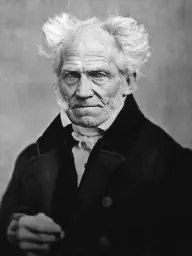
 Arthur Schopenhauer1788 – 1860
“The first forty years of life give us the text; the next thirty supply the commentary on it.”
In Arthur Schopenhauer's voice — an AI reflection
Life is like a book we write without realizing it in our youth, and only in later years do we begin to understand the meaning of what we have written. The first part of life is spent gathering experiences, often haphazardly, while the latter part is spent reflecting on those experiences to extract their true significance. This is why wisdom is the province of age, for it requires both the text of lived moments and the commentary of thoughtful hindsight.
What does this quote mean?
Youth is often lived in the raw immediacy of experience, a succession of events that only later reveal their deeper significance. Schopenhauer’s observation suggests that the first half of life is like a manuscript written in haste, its meaning only unfolded through the reflective maturity that follows. The text of our early years—choices, mistakes, joys—becomes intelligible only when time lends perspective, turning lived moments into understood lessons.
This idea emerges from Schopenhauer’s broader philosophy, where he often contrasted the blind will driving human action with the clarity of hindsight. Writing in the early to mid-19th century, his works like The World as Will and Representation and the essays in Parerga and Paralipomena frequently explore how wisdom arises from suffering and self-scrutiny. For him, aging was not just a biological process but a philosophical one, where the mind gradually deciphers the patterns of its own history. His era, marked by Romantic introspection and post-Kantian idealism, provided fertile ground for such reflections on the interplay between experience and understanding.
Today, this insight resonates in a culture obsessed with youth and speed. Instead of rushing to judge our past or force early conclusions, we might embrace the idea that meaning often arrives late. A career shift at thirty, a relationship re-evaluated at fifty, or a long-held belief questioned in later years—these are not failures but part of the slow work of interpretation. The text of life is not fully written until the commentary begins.
Frequently asked questions
Who said “The first forty years of life give us the text; the next…”?
“The first forty years of life give us the text; the next…” is by Arthur Schopenhauer.
More quotes by Arthur Schopenhauer
Which philosopher are you?
Six questions. No wrong answers.
Keep Arthur Schopenhauer in your pocket
Sagius is free to download and gives you 5 free credits, +5 when you sign up, to try the AI features — chat with Arthur Schopenhauer and other great philosophers, and have any quote explained with the meaning behind it.