Stoicism: a practical guide
Stoicism is an ancient school of philosophy, founded in Athens around three hundred BC. It taught a complete system of physics, logic and ethics, and it held that a happy life is one lived in agreement with nature. This guide explains where the school came from and what its main ideas are. It also shows how the three best-known Roman Stoics whose writings survive in substantial form, Seneca, Epictetus and Marcus Aurelius, turned those ideas into everyday practice, using their own words wherever possible.
Where Stoicism came from
The school takes its name from a building. The first Stoics met and taught in the Stoa Poikile, the painted porch, a colonnade on the north side of the Agora, the public square of ancient Athens. The founder was Zeno of Citium, who started teaching there around the year three hundred BC. He is said to have been a keen reader of the dialogues about Socrates, and he studied with the Cynic philosopher Crates. The new school grew up beside the one Epicurus had founded in Athens a little earlier, and the views of the two rival schools are often compared and contrasted.
After Zeno, the school was led first by Cleanthes of Assos and then by Chrysippus of Soli, who headed it in the later third century BC and is described as its foremost theorist and systematizer. Later leaders included Diogenes of Babylon and his successor Antipater of Tarsus. Under them the school began to engage more with the ideas of Plato, a trend that arguably peaked with Panaetius and his student Posidonius in the second and first centuries BC. Scholars often divide this long history into three phases, though how useful and accurate these labels are is debated: the Early Stoa, the Middle Stoa, and the Late Stoa of the Roman period, which includes Musonius Rufus, Seneca, Epictetus and Marcus Aurelius.
Much of the early material is lost. Almost nothing that Zeno, Cleanthes or Chrysippus wrote survives whole, although Chrysippus is reported to have written a great many books. What we know about the early school comes mostly from later summaries, such as the account in the seventh book of the Lives of Eminent Philosophers by Diogenes Laertius, and from critics who quoted the Stoics in order to argue against them. The earliest Stoic works that survive in substantial form come from the Roman imperial period, above all those of Seneca, Epictetus and Marcus Aurelius. That is why a practical guide leans on these three, while keeping in mind that they wrote mostly about ethics and had their own concerns.
Sources: plato.stanford.edu · en.wikipedia.org · iep.utm.edu
Three Roman Stoics
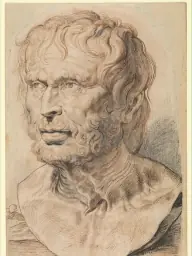
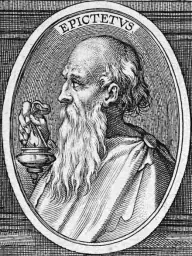
Seneca served as an adviser to the emperor Nero. He wrote essays on topics such as anger, peace of mind and the shortness of life, as well as letters to his friend Lucilius. He was not narrow in his reading: he told Lucilius that he was happy to borrow good ideas from Epicurus, crossing into the other camp not as a deserter but as a spy. Epictetus had a very different life. He had once been enslaved, and he was expelled from Rome by the emperor Domitian along with other philosophers. His teaching was recorded by his student Arrian, and it comes down to us in the Discourses and in a short handbook known as the Enchiridion.
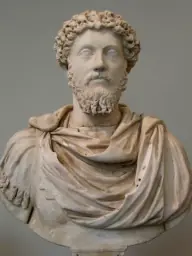
Marcus Aurelius was Roman emperor until 180, and the works of Epictetus influenced him heavily. In the Meditations he often addresses himself directly, as when he tells himself to begin the morning by expecting to meet difficult people, or to remember on a reluctant morning that he is getting up to do the work of a human being. Read together, the three show the same philosophy in three settings: the court, the classroom and an emperor's words addressed to himself.
Sources: plato.stanford.edu · iep.utm.edu · Meditations II.1 · Meditations V.1
What is up to us
One of the most famous Stoic ideas opens the handbook of Epictetus: "Of things some are in our power, and others are not." The Internet Encyclopedia of Philosophy calls this the starting point of his teaching. Epictetus sorts everything into two groups, what is up to us and what is not, and much of his teaching starts from that division. Read practically, the division gives a question one can ask before worrying about something: on which side of the line does it fall?
Epictetus pushes the idea a long way. In the Discourses a speaker answers someone who threatens him: "You may fetter my leg, but my will not even Zeus himself can overpower." Other people may control what happens to our body or our possessions, but on this view the stance we take toward it stays with us. The handbook makes the same point about illness: disease gets in the way of the body, but not of the will, unless the will itself chooses to give way.
A practical rule follows. Epictetus says that we can be invincible if we never enter a contest that is not in our power to win. He also compares life to a play: our task is to act well the part we have been given, while choosing the part belongs to someone else.
Sources: Enchiridion I · iep.utm.edu · Discourses I.1 · Enchiridion IX · Enchiridion XIX · Enchiridion XVII
Judgments and emotions
The second core idea concerns how we interpret events. Epictetus writes: "Remember that it is not he who reviles you or strikes you, who insults you, but it is your opinion about these things as being insulting." The point is that between the event and our reaction there is a judgment, for example the judgment that this is an insult or a disaster. Marcus Aurelius puts it as a chain: take away your opinion and the complaint that you have been harmed goes with it, and once the complaint is gone, so is the harm.
This idea sits at the heart of the Stoic account of the emotions. According to the Stanford Encyclopedia of Philosophy, the Stoics described a passion as an impulse that goes too far and disobeys reason. A passion always involves a judgment, and in the typical case a false one: it treats something as truly good or bad when, in Stoic terms, it is neither. The Stoics named four main kinds of passion. Distress and pleasure concern what is present, while fear and desire concern what is expected. In a comparison reported by Galen, Chrysippus likened a person in the grip of a passion to a runner who cannot stop at once because his own momentum carries him on.
It is a common misunderstanding that the Stoics wanted a life without feeling. As the Internet Encyclopedia of Philosophy explains, they contrasted the unhealthy passions with good feelings rooted in reason. The Wikipedia article on Stoicism groups these good feelings under three headings: joy, wish and caution. According to the Stanford Encyclopedia of Philosophy, the ideal Stoic is not an unfeeling robot: the wise person still has good feelings, directed at what is truly good, such as virtue and virtuous friends. Seneca puts the point in a short line from his letters: "Believe me, true joy is a serious thing."
Because judgments matter so much, the Stoics paid close attention to habits of thought. Marcus Aurelius writes that our habitual thoughts shape the character of our mind, "for the soul is dyed by the thoughts." Epictetus offers an image: everything has two handles, one by which it can be carried and one by which it cannot. Marcus also holds that changing your opinion when someone corrects your mistake is just as consistent with freedom as sticking to the mistake. Judgments are not fate. They can be examined and corrected.
Sources: Enchiridion XX · Meditations IV.7 · plato.stanford.edu · iep.utm.edu · en.wikipedia.org · Letters to Lucilius 23.4 · Meditations V.16 · Enchiridion XLIII · Meditations VIII.16
Virtue and the things that do not matter
Like other ancient schools, the Stoics held that the goal of life is happiness in the sense of a life that goes well as a whole. They disagreed with their rivals about what such a life consists of. According to the ancient anthologist Stobaeus, Zeno described the goal as living in agreement, meaning a life guided by one consistent reason, and Cleanthes added the words with nature. For the Stoics, nature here means both human nature and the cosmos as a whole, which they believed was ordered by a divine reason that they identified with Zeus.
The one thing needed to reach this goal, on the Stoic view, is virtue, the perfected condition of human reason. The Stoics treated the virtues as forms of knowledge and recognized four main ones: practical wisdom, courage, justice and moderation. These go back to Socrates, especially as he appears in the Republic of Plato. The Stoics also held that the virtues belong together, so that whoever truly has one has them all. Epictetus draws a simple consequence: it does not follow that someone richer or more eloquent than you is a better person than you.
From this comes a doctrine that ancient critics attacked sharply. Health, wealth, reputation and even life itself are neither good nor bad, the Stoics argued, because in themselves they neither benefit nor harm us. Only virtue does that. They called such things indifferent. That did not mean ignoring them. Chrysippus rejected the view that all indifferents are equal, and the mainstream Stoic position was that some, such as health, are preferred: they have value, and it is normally right to choose them over their opposites. Ancient critics such as Plutarch and Cicero argued that this position contradicts itself, and scholars still debate whether it holds together.
Does one need to accept the Stoic picture of a divinely ordered cosmos in order to use their ethics? The Internet Encyclopedia of Philosophy says that the generally accepted answer is no. Even Marcus Aurelius, the encyclopedia notes, was open, almost agnostic, about theology: in several places in the Meditations he sets out both alternatives, a world ordered by providence or a random jumble of atoms. Epictetus asks in a fragment whether it is not enough to know the true nature of good and evil and the proper limits of our desires, without settling what the universe is made of. Whatever one thinks of the larger picture, the practical advice can be read and tested on its own.
Sources: plato.stanford.edu · iep.utm.edu · Enchiridion XLIV
Other people, time and death
Much of Stoic writing is about living with other people. Marcus Aurelius prepares himself each morning to meet the busybody, the ungrateful and the arrogant, and he adds that they act this way because they do not know what is good and evil. His conclusion is short: "Men exist for the sake of one another. Teach them then, or bear with them." Seneca makes a similar point in his essay on anger. When a man wanders across our fields because he has lost his way, it is better to put him on the right path than to drive him off. Seneca also warns that a readiness to believe everything we hear does a great deal of harm.
Seneca opens his essay on the shortness of life with a reversal: "we do not receive a short life, but we make it a short one." He notes that people guard their money carefully but give their time away freely, as if it cost nothing. If we could see how many years we had left, he asks, how carefully would we spend them? Since we cannot, he urges us not to put off living, because everything in the future is uncertain. The point is not to fill every hour, but to decide deliberately what our limited time is for.
All three Stoics think often about death, though not in order to frighten themselves. Marcus Aurelius tells himself not to act as if he had ten thousand years to live, and goes on: "While thou livest, while it is in thy power, be good." Epictetus advises keeping death and other things that seem dreadful before our eyes every day, so that we will neither think anything mean nor desire anything too much. In the Discourses he asks a plain question: "I must die. Must I then die lamenting?" Seneca compares life to a play, in which what matters is not how long it runs but how well it is acted.
Sources: Meditations II.1 · Meditations VIII.59 · On Anger I.XIV · On Anger II.XXIV · On the Shortness of Life I · On the Shortness of Life III · On the Shortness of Life VIII · On the Shortness of Life IX · Meditations IV.17 · Enchiridion XXI · Discourses I.1 · Letters to Lucilius 77.20
How to practice Stoic ideas
The Stoics treated philosophy as something to practice, not only to study. They described a figure called the sage, an ideal person of perfect wisdom, but in practice they relied on the idea of making progress, step by step, in both knowledge and character. Epictetus explains how progress works by comparing it to physical skills: every habit grows through the matching actions, "the habit of walking by walking, the habit of running by running." He also warns that if we let our attention slip for a while, we should not imagine we can get it back whenever we like.
Several simple exercises come straight from the texts. In the morning, like Marcus Aurelius, we can run through the day ahead and expect to meet difficult people. Before acting, we can follow the advice of Epictetus and consider what comes first and what follows from it. When something hurts us, we can separate what actually happened from the judgment we added to it. Seneca adds a reason to prepare in advance: it is too late to train the mind to endure danger once the danger has arrived, and whatever has happened to anyone can also happen to us.
Stoic practice is also about honesty with oneself. Epictetus says that an untrained person blames others for their own troubles, someone who has begun learning blames themselves, and someone whose training is complete blames neither. Seneca tells a friend who had travelled far that his faults will follow him wherever he goes: "It is your mind you must change, not your sky." And when a task seems too hard, he turns the usual excuse around: "It is not because things are difficult that we do not dare; it is because we do not dare that they are difficult."
Finally, the Stoics judged a philosophy by how it is lived. Seneca writes that philosophy is not made for display, since "it lies not in words but in deeds." Epictetus encourages his students in the same spirit: even if you are not yet a Socrates, you should live as someone who wants to be one. The perfect sage remains the goal, but for everyone who falls short of it, Stoic practice is a matter of making progress step by step, with a willingness to be corrected along the way.
Sources: iep.utm.edu · Discourses II.18 · Discourses IV.12 · Meditations II.1 · Enchiridion XXIX · Enchiridion XX · On Tranquillity of Mind XI · Enchiridion V · Letters to Lucilius 28.1 · Letters to Lucilius 104.26 · Letters to Lucilius 16.3 · Enchiridion L · Meditations VIII.16
Read each of them
In their own words
“Of things some are in our power, and others are not.”
Enchiridion I, trans. George Long
“Remember that it is not he who reviles you or strikes you, who insults you, but it is your opinion about these things as being insulting.”
Enchiridion XX, trans. George Long
“You may fetter my leg, but my will not even Zeus himself can overpower.”
Discourses I.1, trans. George Long
“Every habit and faculty is maintained and increased by the corresponding actions: the habit of walking by walking, the habit of running by running.”
Discourses II.18, trans. George Long
“Men exist for the sake of one another. Teach them then, or bear with them.”
Meditations VIII.59, trans. George Long
“Such as are thy habitual thoughts, such also will be the character of thy mind; for the soul is dyed by the thoughts.”
Meditations V.16, trans. George Long
“Do not act as if thou wert going to live ten thousand years. Death hangs over thee. While thou livest, while it is in thy power, be good.”
Meditations IV.17, trans. George Long
“Thus it is: we do not receive a short life, but we make it a short one, and we are not poor in days, but wasteful of them.”
On the Shortness of Life I, trans. Aubrey Stewart
“It is your mind you must change, not your sky. Though you have crossed the wide sea, though, as our Virgil says, “lands and cities fall away behind,” your faults will follow you wherever you arrive.”
Letters to Lucilius 28.1
“It is not because things are difficult that we do not dare; it is because we do not dare that they are difficult.”
Letters to Lucilius 104.26
“Philosophy is not a craft for pleasing the crowd, nor one made for display; it lies not in words but in deeds.”
Letters to Lucilius 16.3
This guide was written by AI from the sources listed under each section and the cited passages, then checked against them in a separate AI run. No human edited it.
Themes where the Stoics are quoted
Thinkers in this tradition
- Seneca4 BC – 65
Lucius Annaeus Seneca (c. 4 BCE–65 CE) was a Roman Stoic philosopher, statesman, and playwright who served as advisor to Emperor Nero. In his Letters to Lucilius and his essays, he transformed Stoic philosophy from…
- Marcus Aurelius121–180
Marcus Aurelius (121–180 CE) was Roman emperor and Stoic philosopher. His Meditations, a private journal never intended for publication, records his daily efforts to live by Stoic principles: acceptance of what cannot…
- Epictetus50–135
Epictetus (c. 50–135 AD) was a Greek Stoic philosopher who was born into slavery in Hierapolis, Phrygia. After gaining his freedom, he studied under the Stoic teacher Musonius Rufus and later founded his own school in…
- Cicero106–43 BC
Roman statesman, orator, and philosopher whose writings on law, duty, and friendship profoundly shaped Western political and ethical thought.
- Chrysippus of Soli281–208 BC
Chrysippus of Soli (c. 281–208 BCE) was the third head of the Stoic school and its greatest systematiser — the ancients said that 'without Chrysippus there would be no Stoa'. He is credited with over 700 works, all now…
- Cleanthes331–232 BC
Cleanthes (c. 331–232 BCE) was the second head of the Stoic school, succeeding its founder Zeno of Citium. A former boxer who arrived in Athens nearly penniless, he carried water by night so he could study philosophy by…
- Zeno of Citium334–263 BC
Zeno of Citium (c. 334–263 BCE) was the founder of Stoicism. A merchant of Phoenician descent from Cyprus, he reportedly turned to philosophy after a shipwreck left him in Athens, where he studied with the Cynic Crates…