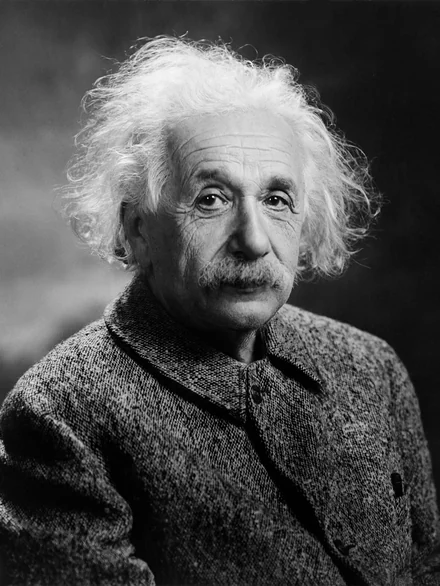
 Albert Einstein1879 – 1955
“Truth is what stands the test of experience.”
In Albert Einstein's voice — an AI reflection
When I say truth must stand the test of experience, I mean it is not enough for an idea to be beautiful or comforting—it must also endure the rough touch of reality. Theories, like bridges, must bear the weight of what we place upon them. If they crumble under the load of observation, they are not truth, no matter how elegant they appear on paper. Experience is the final judge, the only one who cannot be bribed.
What does this quote mean?
A claim does not become true simply because it is widely believed or elegantly expressed; its value lies in its ability to withstand repeated testing against reality. Einstein here elevates experience as the ultimate arbiter of truth, framing knowledge not as static doctrine but as a dynamic process of verification. This perspective dismantles the illusion of absolute certainty, suggesting that what we accept as true must be continually subjected to the scrutiny of observation and experiment.
This idea emerged from Einstein’s own scientific revolution in the early 20th century, a time when Newtonian physics was being re-examined through new empirical lenses. His development of the theory of relativity was not a product of abstract speculation alone but a response to inconsistencies revealed by experimental evidence, such as the Michelson-Morley experiment. In works like Relativity and The World as I See It, he consistently emphasized that scientific truth is provisional, always open to revision in light of new data. His intellectual environment, marked by rapid advances in physics and a growing skepticism of dogma, reinforced this empirical stance.
Today, this principle remains a cornerstone of critical thinking. Whether evaluating a new technology, a political claim, or a personal belief, the test of experience—real-world evidence and outcomes—should guide judgment. In an era of misinformation, Einstein’s insight encourages us to demand verifiable support for assertions rather than accepting them on faith or authority. It reminds us that truth is not a fixed destination but a path shaped by continuous, honest engagement with the world around us.
Frequently asked questions
Who said “Truth is what stands the test of experience.”?
“Truth is what stands the test of experience.” is by Albert Einstein.
More quotes by Albert Einstein
- “The individual can accomplish little here, nor can one wish to see the best among us devoted to destruction through the machinery behind which stand the three great powers of stupidity, fear, and greed.”
- “We should take care not to make the intellect our god; it has, of course, powerful muscles, but no personality.”
- “Falling in love is not at all the most stupid thing that people do — but gravitation cannot be held responsible for it.”
Which philosopher are you?
Six questions. No wrong answers.
Keep Albert Einstein in your pocket
Sagius is free to download and gives you 10 free credits to try the AI features — chat with Albert Einstein and other great philosophers, and have any quote explained with the meaning behind it.